

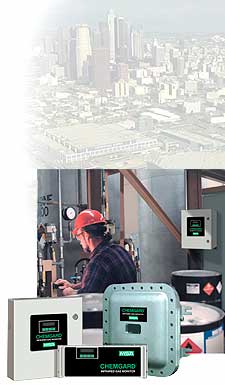
The Los Angeles County Department of Public Works (LADPW) has some pretty daunting responsibilities when it comes to water management.
Integral to the storm water management system are large networks of storm water pump stations, used to handle heavy rain runoff. These enclosed pump stations are driven by combustible natural gas-powered engines that require methane monitoring to ensure worker and facility safety.
Storm water pump stations also need to be monitored for potentially high LEL (Lower Explosive Limit) conditions caused by illegally dumped waste solvents and other combustible compounds that are carried in with the storm waters. (Two examples of land use that generate highly contaminated runoff are fueling stations and airport de-icing facilities.)
So, when the LADPW needed the best permanently installed
instruments to monitor for methane and hydrocarbons in their storm water
pump stations, they turned to MSA’s multi-point Chemgard® Photoacoustic
Infrared (PIR) Gas Monitoring System. Although this high-performance
gas detection method is considered low-cost compared to other systems,
the PIR sensing technology is extremely stable. In addition to this system
operating for months with virtually no zero drift, the PIR technology
greatly reduces interference effects from background gases and humidity.
This Chemgard Monitoring System even detects minor changes in hydrocarbon levels to alert operators of spills into the system. The Chemgard can be configured to detect from parts per million (PPM) up to 100 percent for nearly 100 major industrial compounds, including 100% of the LEL for combustible gases, including methane.
For more information about the Chemgard PIR Gas Monitoring System and how it can be incorporated into your application, call 1-800-MSA-INST, or log on to www.MSAgasdetection.com.
A few facts . . .
For flood control, the LADPW operates and maintains 15 major dams, about 450 miles of open channel, almost 2,500 miles of underground storm drains, 70,000 street drains, about 280 sediment entrapment basins and 218 concrete stream bed stabilization structures, 33 pumping plants, and numerous county support facilities.
Yearly, the Watershed Management Division conserves about 220,000 acre-feet of local storm water runoff in L.A. County that would otherwise waste to the ocean. This amount, valued conservatively at over $73 million, consists of direct storm runoff and post-storm releases from the dams.
— LADPW
website fact sheet